
Ysgol Minafon
Religion, Values and Ethics
The right to withdraw from the Curriculum for Wales (RVE)
Since September 2022, there has been no parental right to withdraw from RVE in respect of all learners up to and including year 6. Engagement with RVE is mandatory for all pupils of primary school age as highlighted within the Humanities Area, and published under section 71 of the Act.
The purpose of RVE
RVE is not about encouraging pupils to adopt a particular religion or belief. Instead, it aims to help learners:
- Develop an understanding of a wide range of religious and non-religious world-views.
- Explore big questions about life, meaning, identity, morality and purpose.
- Think critically and respectfully about different beliefs and values.
- Develop empathy, respect and informed opinions in a diverse society.
- Become ethical, informed citizens, one of the four purposes of the Curriculum for Wales.
What pupils learn about
RVE includes learning about:
- Christianity (reflecting its historical significance in Wales)
- Other principal world religions, such as:
- Islam
- Hinduism
- Judaism
- Sikhism
- Buddhism
- Non-religious philosophical convictions, including:
- Humanism
- Atheism
- Agnosticism
- Other ethical and philosophical perspectives
Pupils also explore themes such as:
- Identity and belonging
- Justice and fairness
- Relationships
- Diversity and inclusion
- Human rights
- Life and death
- The environment
- Moral and ethical decision-making
- Meaning and purpose
How RVE should be taught
The Curriculum for Wales requires RVE to be:
- Objective – presenting different beliefs fairly.
- Critical – encouraging questioning and evaluation.
- Pluralistic – recognising the diversity of beliefs in Wales and beyond.
- Inclusive – ensuring all learners see their own and others' beliefs represented respectfully.
What this looks like in Ysgol Minafon 2026-2027
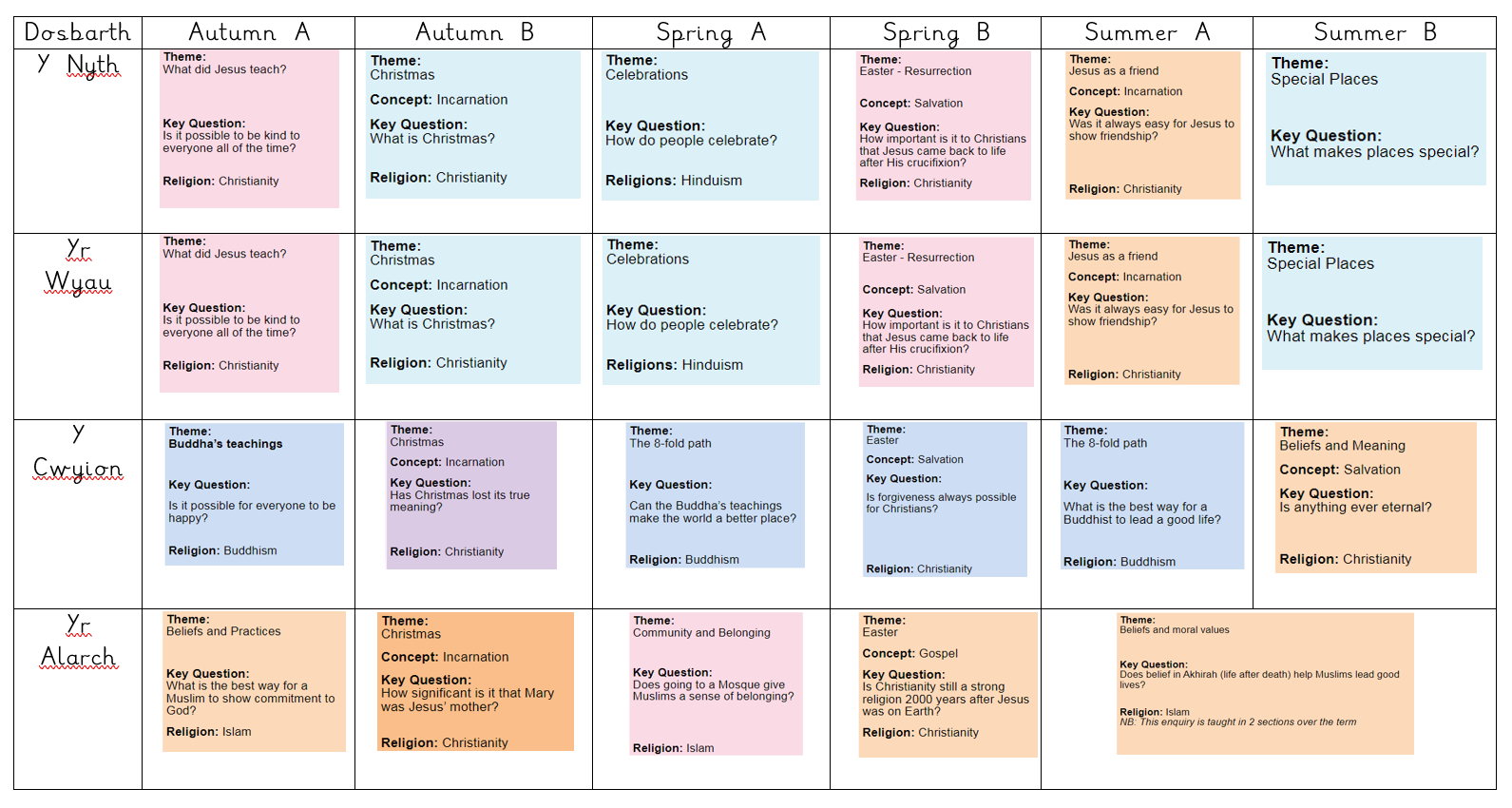
Rather than memorising religious facts, learners are encouraged to ask questions, discuss ideas, consider different viewpoints and reflect on their own developing beliefs and values.